
Because it's there
Why we do this

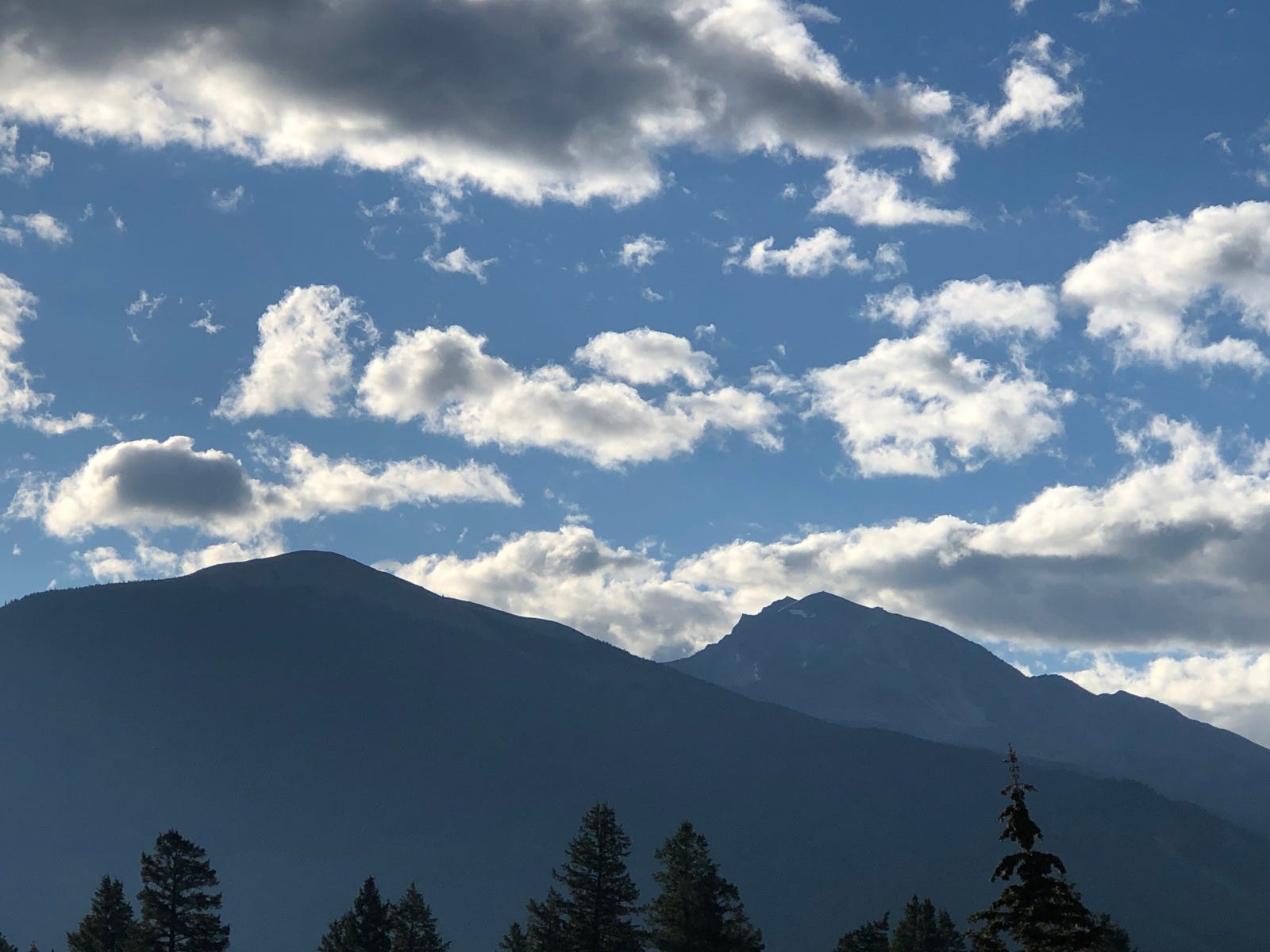
“Because it’s there.” That’s the response George Mallory gave to a reporter who asked why he was intent on climbing Everest. Mallory was of that generation of British mountaineers who made a number of attempts on Everest in the early 1920s. It was the start of the Everest obsession.
I was thinking of Mallory’s terse reply on a day when I was cycling through a torrential downpour on an endless series of climbs. What had impelled me to leave the comforts of home, family and friends for the better part of six months?
“Because it’s there.” What did Mallory mean? The phrase has clarity and simplicity. There is a mountain there, I want to climb it. But the more I thought about it, the more enigmatic it became. What is the “it” that is there? Well, Everest, of course. Everest needed to be conquered and dominated. Was Mallory implying that all that is outside of the human must be subjected to human mastery?
That answer didn’t satisfy me. The “it” suggested to me something hidden, cryptic, an intangible longing, a need for transcendence. Could the horrors and devastations of the First World War (Mallory was on the front lines at Somme) have required a cleansing of the spirit which only the hardest, most obdurate effort could supply?
My hardships were nothing of the order of Mallory’s. Still, there I was in the pouring rain facing the prospect of setting up a soggy tent at the end of eight hours of hard cycling with no hot shower to soothe weary bones. I knew that no doubt more and other sorts of difficulties would come to pepper days also filled with wonder and delight. Hadn’t my first couple of weeks--accidents, injuries, Covid--taught me enough is enough?
There are fifteen of us who are doing the full six-month continental ride and a handful of others who are doing the better part of it. I started asking them what impelled them to sign up for such a foolhardy undertaking.
David is my roommate on rest days when we hunker down in hotels. He’s from Leeds in northern England. He’s in his late thirties with a long handsome face and a tuft of unruly hair hanging over his forehead. He has a habit when thinking of pacing in a distinctive loping manner, head and shoulders bent forward like a long-legged crane. He’s always thinking, planning, considering options. He collects tourist brochures and pamphlets at every stop. He makes lists. He’s a chess master figuring out moves for sightseeing opportunities weeks ahead of our planned rest day arrival.
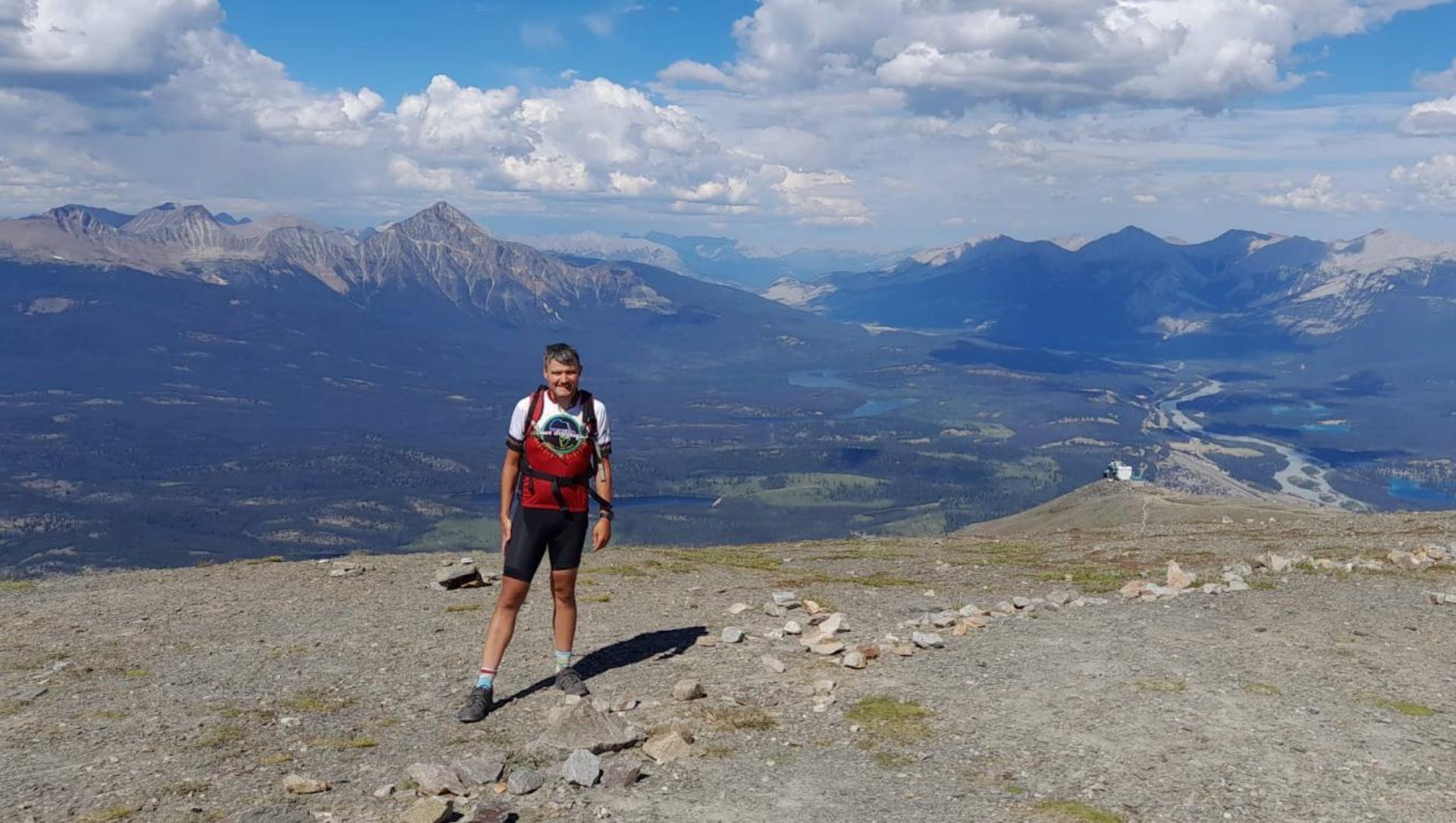
He says he overthinks things. I see a gift, a talent for amassing and digesting great quantities of data. This may be a reflection of his work. He’s a sports aficionado who works for the Cricket Board of England and Wales as a strategic analyst. However, in the context of what we are doing his numbers game may be something else.
David had a particularly hard time in the first weeks. Not the cycling. The mosquitoes which descended on us in large supernova clouds. We were all covered in bumps and lumps and sores. But David was different. His back was a massive swollen range of tectonic mosquito formations.
I put the question to him. Why go through this? He hunched over, chin in hand, and began to tell me of how he took a gap year after university to travel through India and Nepal. Later he grabbed an opportunity to sail across the Pacific. He spoke about liking cycling and challenges and a way of seeing the world.
There are better, more efficient, more exhaustive ways of taking in the world. Our essential purpose is not tourism; it is the road. We wake at dawn, we cycle for hours, we camp. Then we do it again. Day in, day out. For thousands of kilometers. Can all the furious planning activity be a form of disguise, a way of clothing an inexpressible drive in words that can make sense. To oneself? To others?
Hans and Niels are from the Netherlands, although Niels has been settled in the States for many years. Both are tall, lean, muscular and excellent cyclists. There the similarities end.
Niels on his bike is all grace and light. He is a swordsman slicing through the air, a sharp razor rending silk. Off the bike he is more tentative. He is like one crossing a frozen lake testing the thickness of the ice for its load-bearing capacity. When I listen to Niels I hear Wordsworth’s lines, “the world is too much with us”. Niels is in a tug of war with the world, pulled in, pushing out.
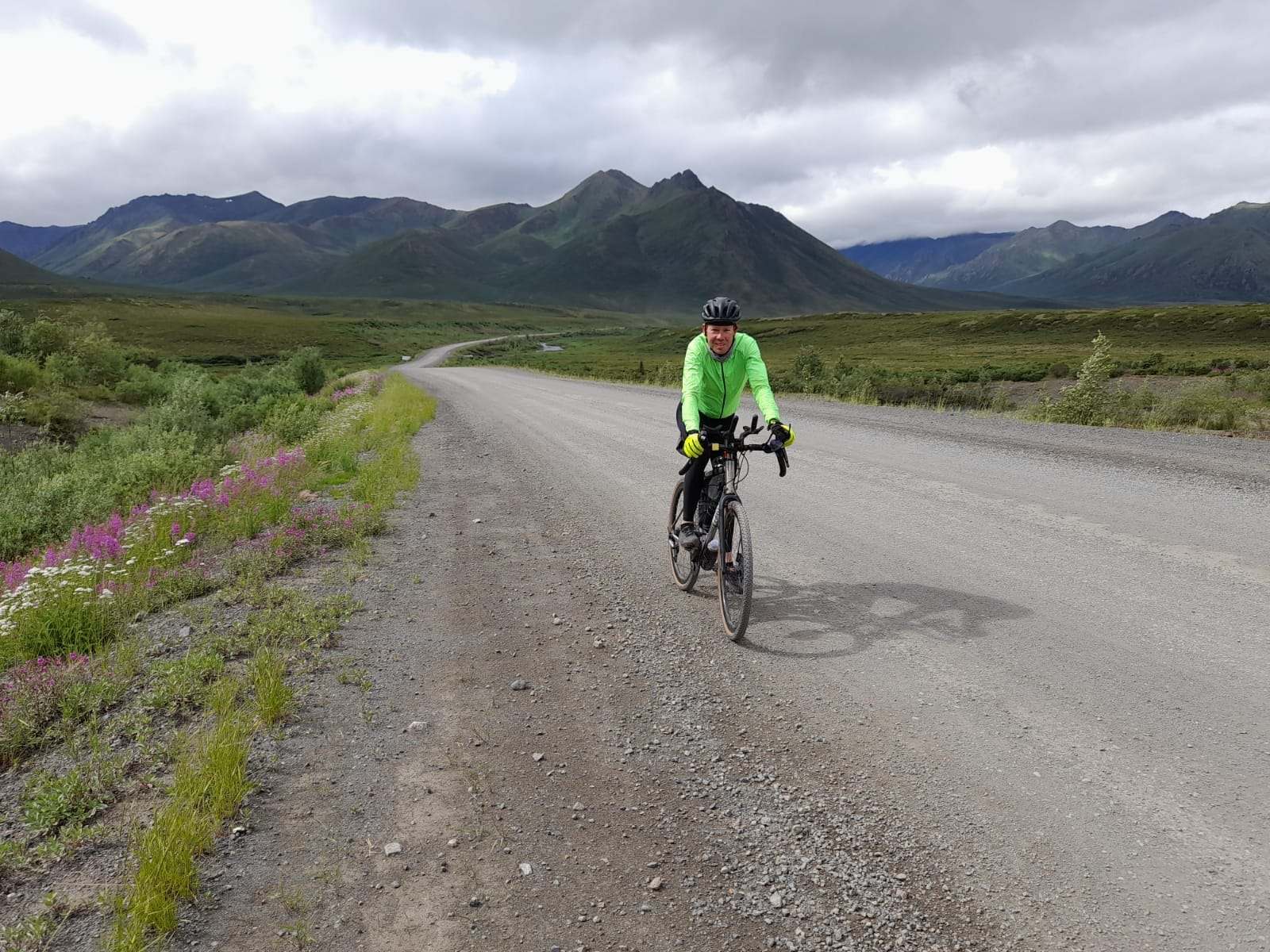
At the age of thirty he and his wife quit their jobs, a break from a life too busy, too overdetermined. They backpacked across the South Pacific. They travelled in every form of transport: cargo ships, sail boats, outrigger canoes, dugouts. They stayed with villagers and dined with chiefs. The mystique of the popular image of the idyllic South Pacific was shattered by the already too evident depredations of environmental degradation: flooding, loss of habitat, death of coral reefs. The poverty they encountered was if anything harder on them.
Niels says that year “broadened our perspective, our frame of reference. Returning meant saying goodbye to city life forever.” They retreated to the San Juan islands.
So why cycling, why this trip, this engagement with the world?
“In Netherlands we cycle before we walk.” It is one of his forever things. He says “it was time for another adventure. There is a lot of the country I haven’t seen. I wanted the challenge.”
What is the adventure, the challenge that calls him? The tug of war. Push and pull. The world calls him even as he steps away. It is there, an immovable magnetic reality. This world; other worlds.
“Because it is there.” It plays like an underlying recurring musical motif in my conversations.
If Niels is a swordsman, Hans is a pile driver. He hammers through, fierce in his determination to best any and all obstacles, head winds, rain, steep gradients, sometimes intense personal discomfort. There is an edginess to him, alert to the shifting climates of terrain, weather, wildlife, moods. In his work he has lived abroad for long periods of time, Curaçao, Mexico, Dubai, elsewhere. To be successful as he has been required a fine-tuned sensitivity to changing cultural dynamics.
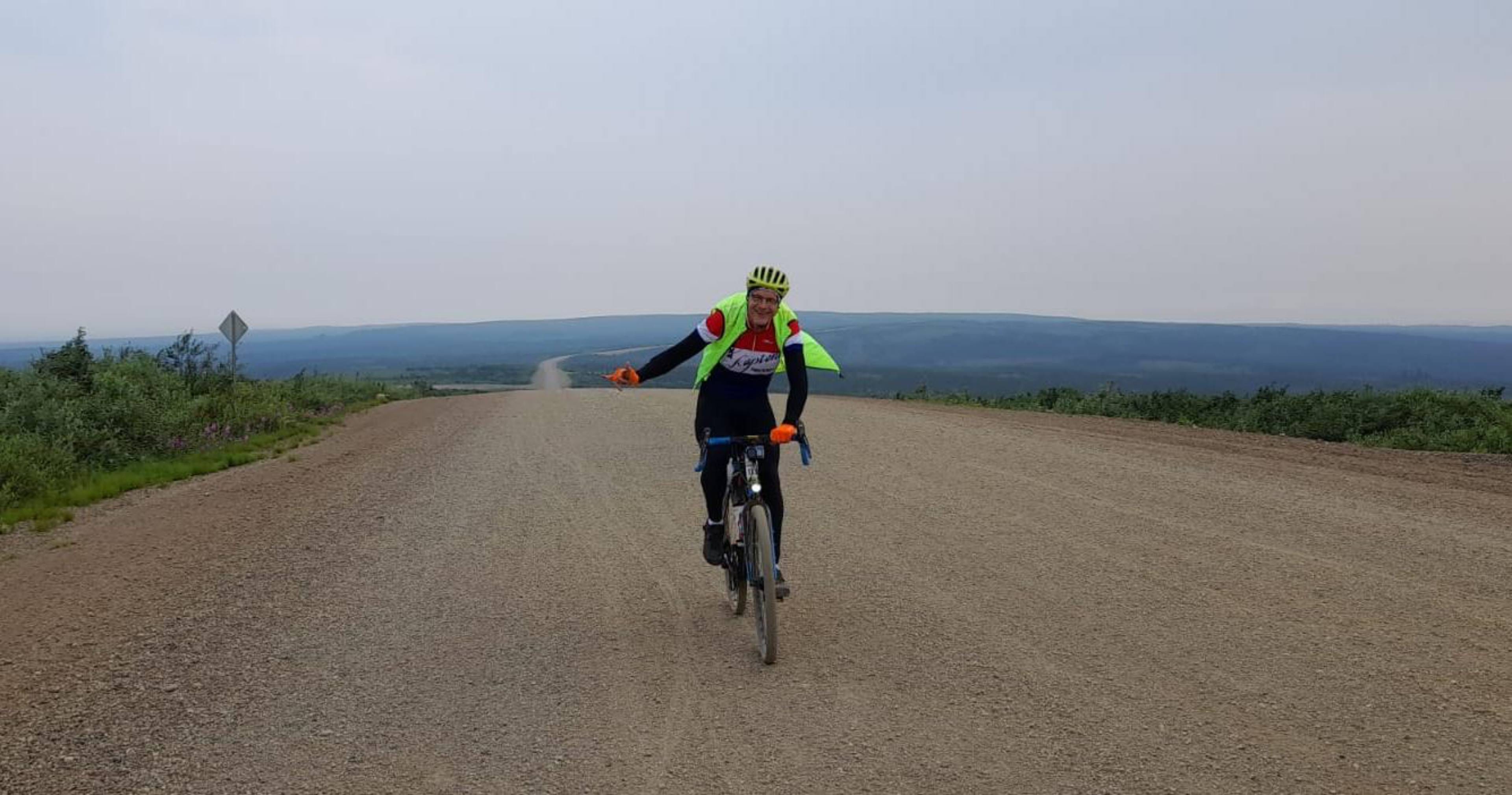
So why is he here?
“It was always on my bucket list,” he says.
What is a bucket list? It is that experience we want before we die. The expression carries with it end days, that hint of otherness and the elsewhere that awaits us all. The bucket list is not the legacy one wants to leave the world; it is the imprint we wish to inscribe on the ether, one that will linger like contrails long after we are gone.
As I continue my discussions with Hans and Niels one other startling similarity emerges. It moves me greatly. Each, whose lives are so far apart and so different, expresses in almost identical ways their inextricable bond of love, friendship, and more, with their wives. I am startled by their depth of feeling, all the more eloquent for being said in a matter-of-fact way. Niels’s Amy and Hans’s Marjan are the tethers that allow them to soar into transcendental realms.
Cat didn’t say “bucket list”, but it amounted to the same thing. “I want to look back on my life and say I did things.”
Cat is a law professor in San Diego. She had practiced on Wall Street for a number of years before moving into the world of education, which had always been her goal. The more I discover about her, the more impressed I am by an indomitable core. Out of university she joined the Peace Corps and spent two years in an Armenian village teaching English. She did a law internship in Nairobi, Kenya at a woman’s collective. She has cycled across Africa. Now, she is settled.
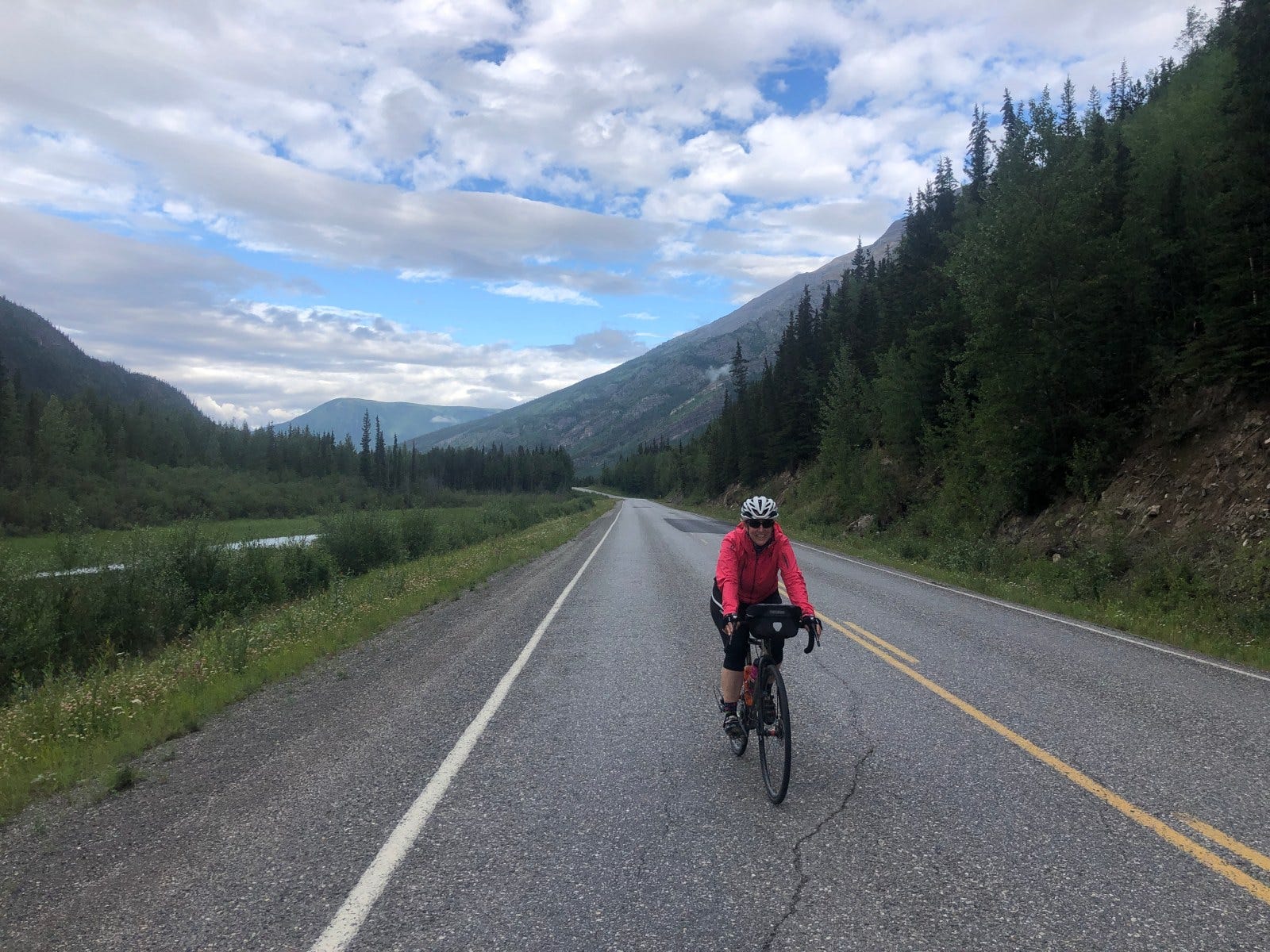
She says she will never leave San Diego. It is her perfect city. She loves her friends, her home, her work. Even if she were offered a more prestigious professorship at an Ivy League school she wouldn’t accept it. “I’ll never leave my home, this city. But I don’t want to wake up after twenty-five years and ask ‘what have I done’”.
On a journey like this the mind is concentrated wonderfully on end times. “Do not ask for whom the bell tolls; it tolls for thee.” It is as if only in the scouring of the road we hear the chimes that ring for us and we are the more alive for it.
“Because it is there”, chords of an unearthly strain.
Klaus worked in education in Denmark developing cultural programs for children. He is seventy. He walks with a slight stoop as if each step is a monumental decision. He has been retired for eleven years; yet he is constantly seduced, to his own bemusement, by the siren call of hard journeys in hard lands.
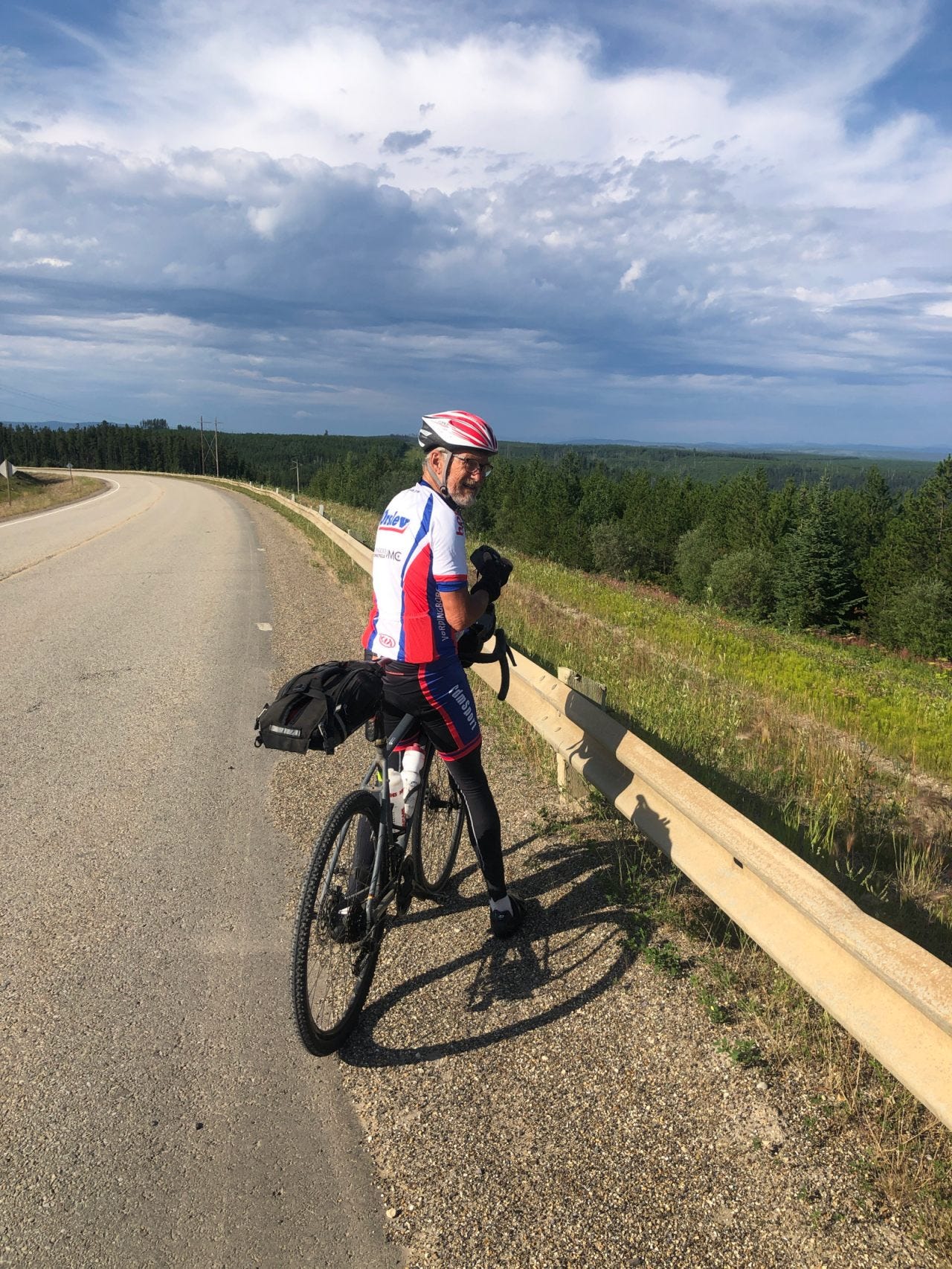
His first was TDA’s cycle tour from Cairo to Cape Town. It took him three attempts to complete the four-month trek. The first one ended in Northern Kenya with a fall on sharp lava rocks that broke his hip. Enough to end such dreams for most people. Not Klaus. The second time he was hit by a car in Botswana and suffered a fractured pelvis. Were the gods sending him a message? He returned for a third go and made it to Cape Town without mishap. After that he said never again.
The sirens of otherness do not know the word “never”. Their call was sweet and insistent. Klaus yielded. He signed up to cycle South America from top to toe. Five months of tough going up and down the Andes at altitudes nearing 5,000 meters. Why go through so much suffering once and then again and again. He has no clear answer. Like others he mentions “a challenge”. I think of “challenge” as a code word for the reach into realms beyond our ken.
My first impression of Rick is of a good, old boy from the Sault. He has a folksy way about him—his speech peppered with the ubiquitous Canadian “eh”—but it is in the manner of Mark Twain, shrewd and pointed.
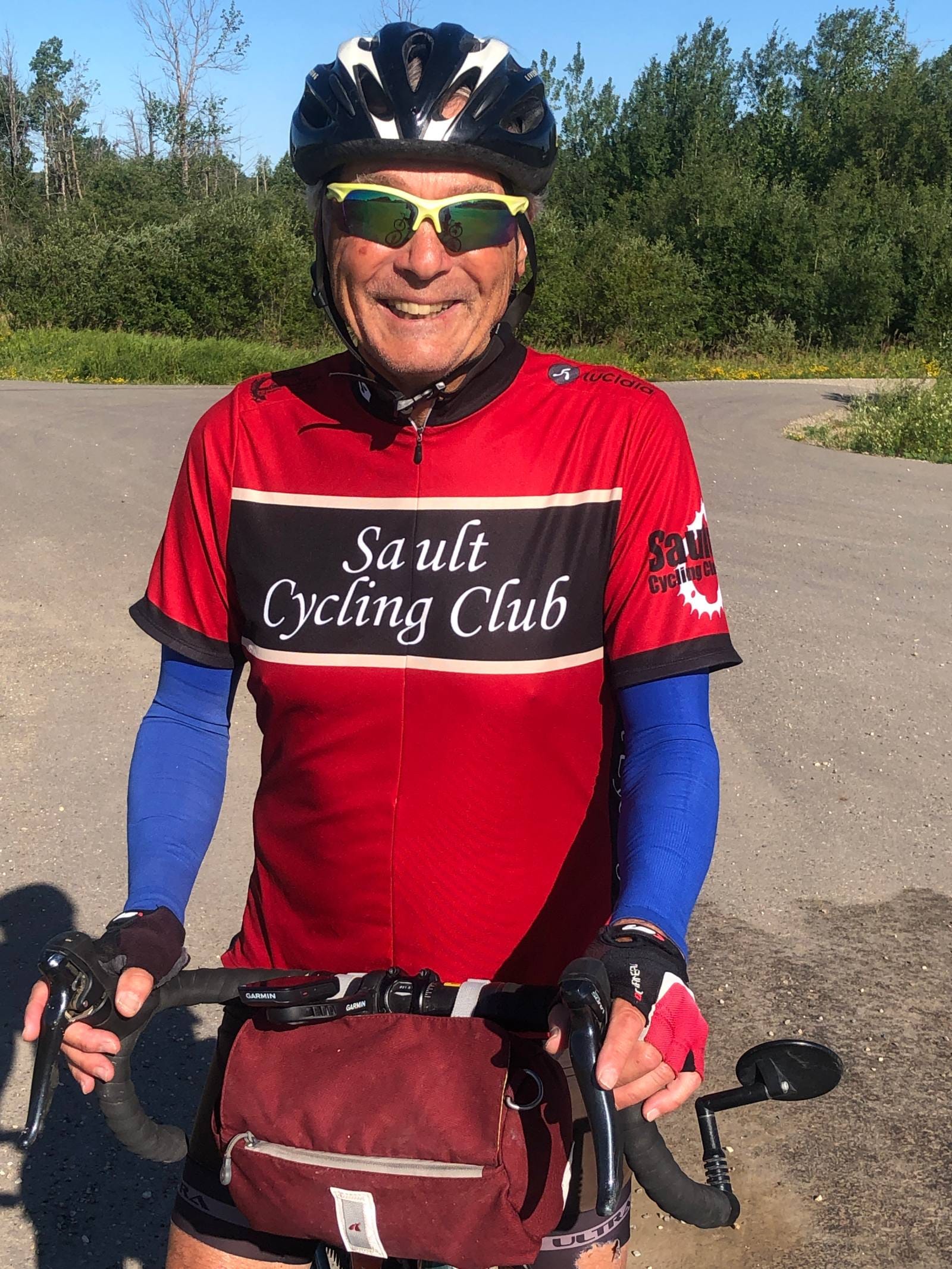
Rick has sides to him not immediately evident. His career was spent as an elementary school teacher in remote reserves and smaller communities. It speaks to a greatness of heart, dedication to purpose. One senses in him something steadfast and true.
He is tough too, strong on the wheels, thinking nothing of biking miles in hill country to visit his son then turn around and cycle home. It was long in him to do something of the nature of our trip. He was hesitant to leave his wife for near six months. It was his son, repaying the sagacity of the father, who said to him, “Dad, sometimes you have to tell your own story.”
What is that story? What is being sketched out on our long days on the road?
Several days after our initial conversation Rick adds a casual afterthought. “I’m doing this for a dear friend, a doctor who has been a mentor to me who can’t now do these things himself.”
I find it is like that, the quiet, by-the-way mention—not right away, later—of others who are gone. Hans talked of his parents who had passed away two years before. Inge thinks of her brother, dead too young, thirteen years now. John says his Dad, a geography master, would be proud and would have loved to have traveled through our landscapes. Spirits accompany us.
Mike Crum is an orchardist from New Zealand cultivating organic kiwis. He is tall and wide of girth. Man as teddy bear. The open wonder of boyhood still marks his large, genial face. He calls to my mind Theodore Roethke, the great American poet of cultivation and childhood, himself a large, burly figure. “Where knock is open wide.” The knock came early to Mike as a lad and young man among the vines of his orchard. Time alone was time for imagination to soar. He lived in the roots of the earth and the dreams of the air.
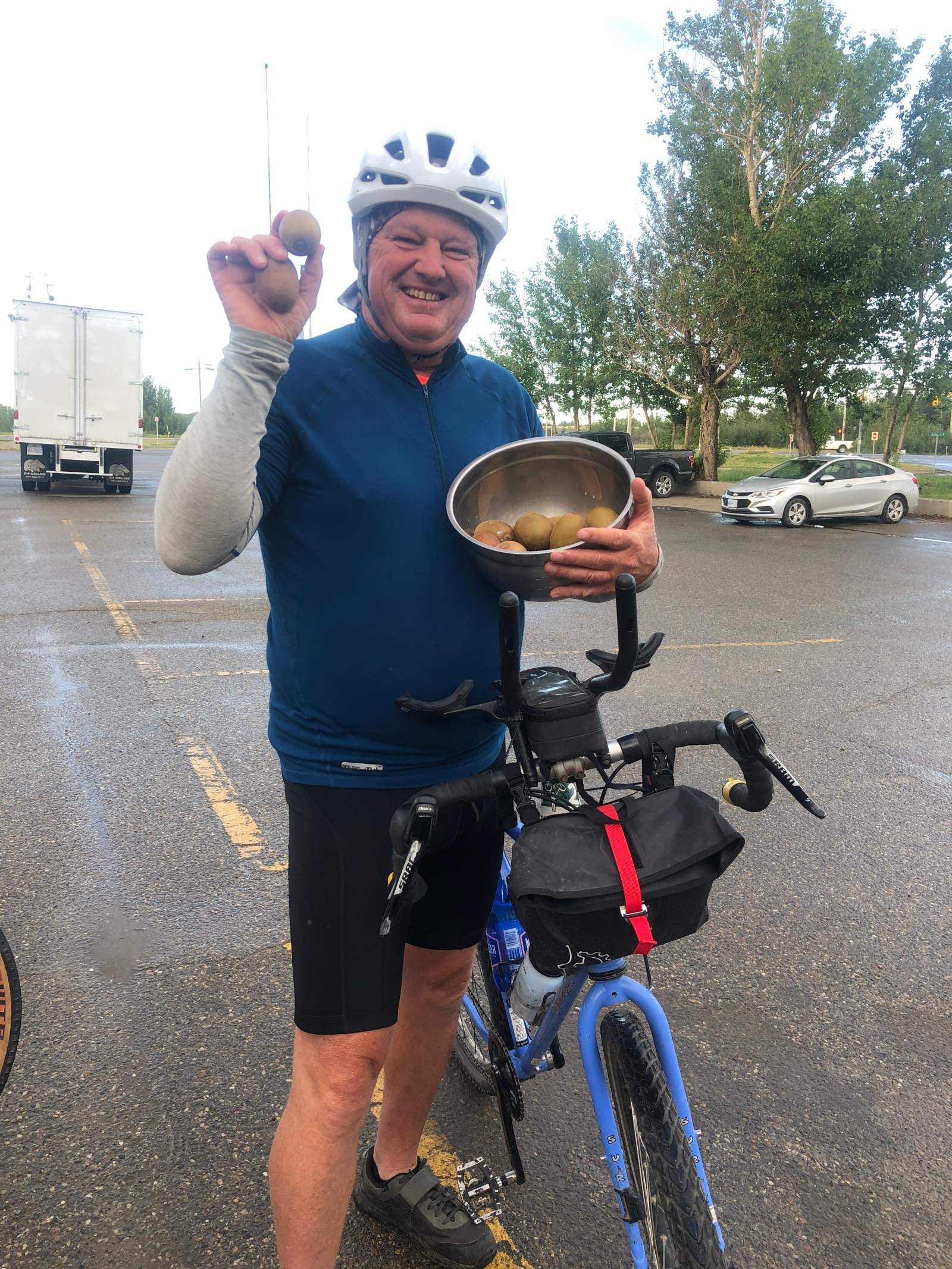
He quit school at fifteen. He says, “I worked all my life, non-stop for forty years. I wanted to explore other things.” There are many ways to explore the world. Why choose something so demanding. Again the word “challenge” comes up. It takes an imagination of a different kind to reach for this challenge.
As for myself, to embark on this voyage is like stepping through a magic wardrobe into another world. I am in liminal space, the in between place where the road is a pumice stone scrubbing away the habits of daily life. I am in the moment. I am aware of place, the tundra wilderness of the Arctic, the pine forests of the north, the majesty of the mountains. I am aware of the shape and contour of the road with its cracks, debris and bumps. I am acutely attuned to sounds: the whoosh of the traffic, the logging trucks with their guttural roar, the harsh grinding of the pick-ups, the wind catching mobile homes. I have my destination in mind; an internal odometer tracks the kilometers flying by. I keep an ear cocked to signals of body and bike. Is the brake brushing against the rotor? Is the chain squeaking? Is that twinge in the knee momentary or a sign to ease up?
I am aware of all these things but I am also in another dimension of space-time; the two dimensions, the here and now and the other, interpenetrating each other as ghosts moving through solid walls. The singular rhythm of the road has conjured up the worm hole that allows the simultaneous existence of different states of consciousness. It lends itself to that drift towards the elusive transcendence, to the “it” of “because it is there”.
Why does that need for transcendence loom large in our lives?
I think of the First Nations people I met. I have a very different sense about them. Their “it” was immanent. It was in the hills and valleys, the forests and lakes and rivers, in the animals that provided food and elements of clothing and shelter, it was the language they spoke. When that language was ripped out of them, they were unmoored, exiled from the immanence that had filled their lives with meaning.
Paul Celan, the great German-language lyric poet, whose family had perished in the Holocaust, spoke of the immense cost of writing in “the language of the murderers.” The First Nations had their tongues excised and transplanted with a foreign organ. English (and French) were like swollen snakes in their mouths, each word a self-injected venom, until as generations passed language could be transformed, bastardized, pidginized, turned inside out to become an instrument of their own choosing. But could it ever recover the immanence that had once been totally theirs?
For much of our Western history we have disdained immanence and those, like First Nations, who live by it. At some point we became perpetually unmoored from the here and now, driven to find our meaning in an elsewhere beyond.
We are an unlikely group of pilgrims on our way to an imaginary Canterbury etching our tales in tarmac and gravel.
“Because it is there” summons us like the distant tolling of church bells—impossible, necessary.
Hi,
Thanks for taking the time to respond. Part of how I spend the long hours on the saddle is think about these things and then most of my rest days are taken up with working at articulating incoherent thoughts.
Hi, thanks for reading and the encouragement.