

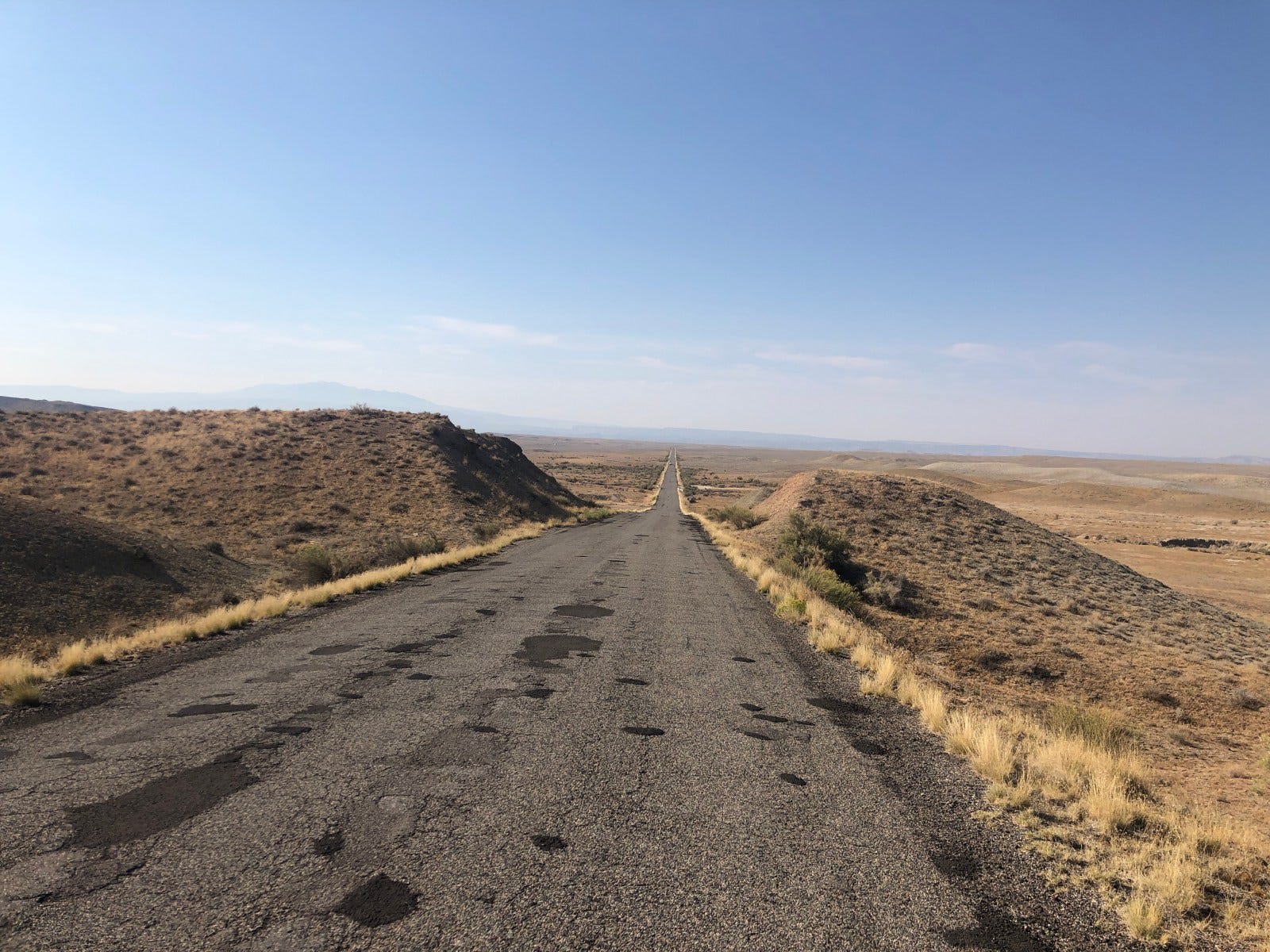
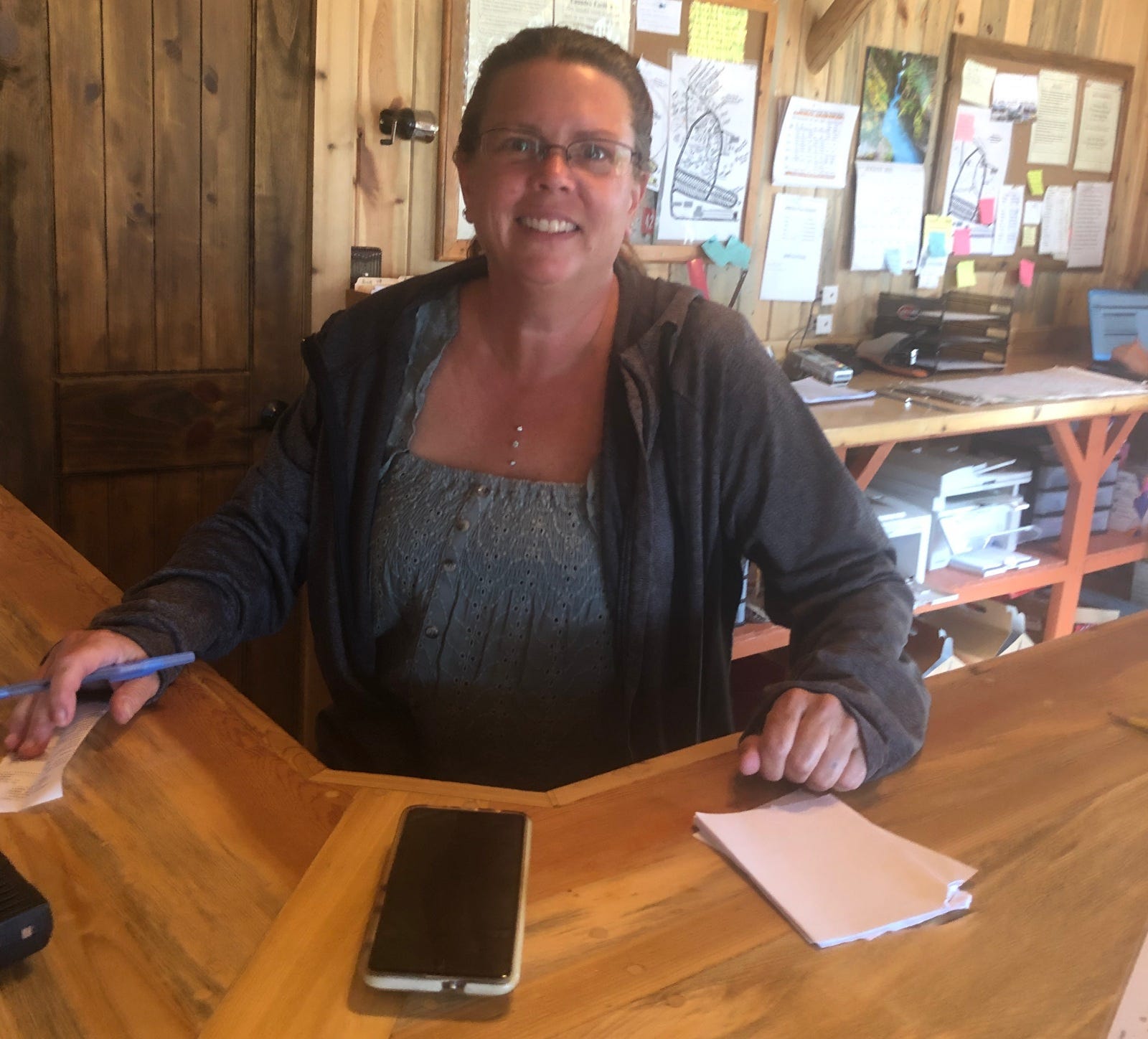
We cycled into the campsite at St Mary, Montana in the early afternoon. The next day we were going to climb the Sun Road in National Glacier Park. It was hot and the campsite office was air conditioned and had wall plugs to charge our devices. Raquel and her daughter are running the front desk. Raquel is affable and ready with helpful advice about our route. We start talking. She tells me she served 28 years in the military; a logistics officer. Soon after retiring out she entered into a relationship that took her to Hawaii. It didn’t last long, 19 months. She was at loose ends and her daughter needed some support. She saw an ad; the campsite was looking for a manager. She’d hardly sent in her application when she was hired. She packed up her RV, her daughter and four dogs and they were on the road to Montana. Happy and free. Where the road will take them after the season is over she doesn’t know.
At our rest day in Whitefish a feisty older woman stands alone at the farmer’s market with a home made sign denouncing the overturning of Roe v Wade. A few blocks away, across from our hotel, a small group of anti-abortionists are picketing a family planning centre.
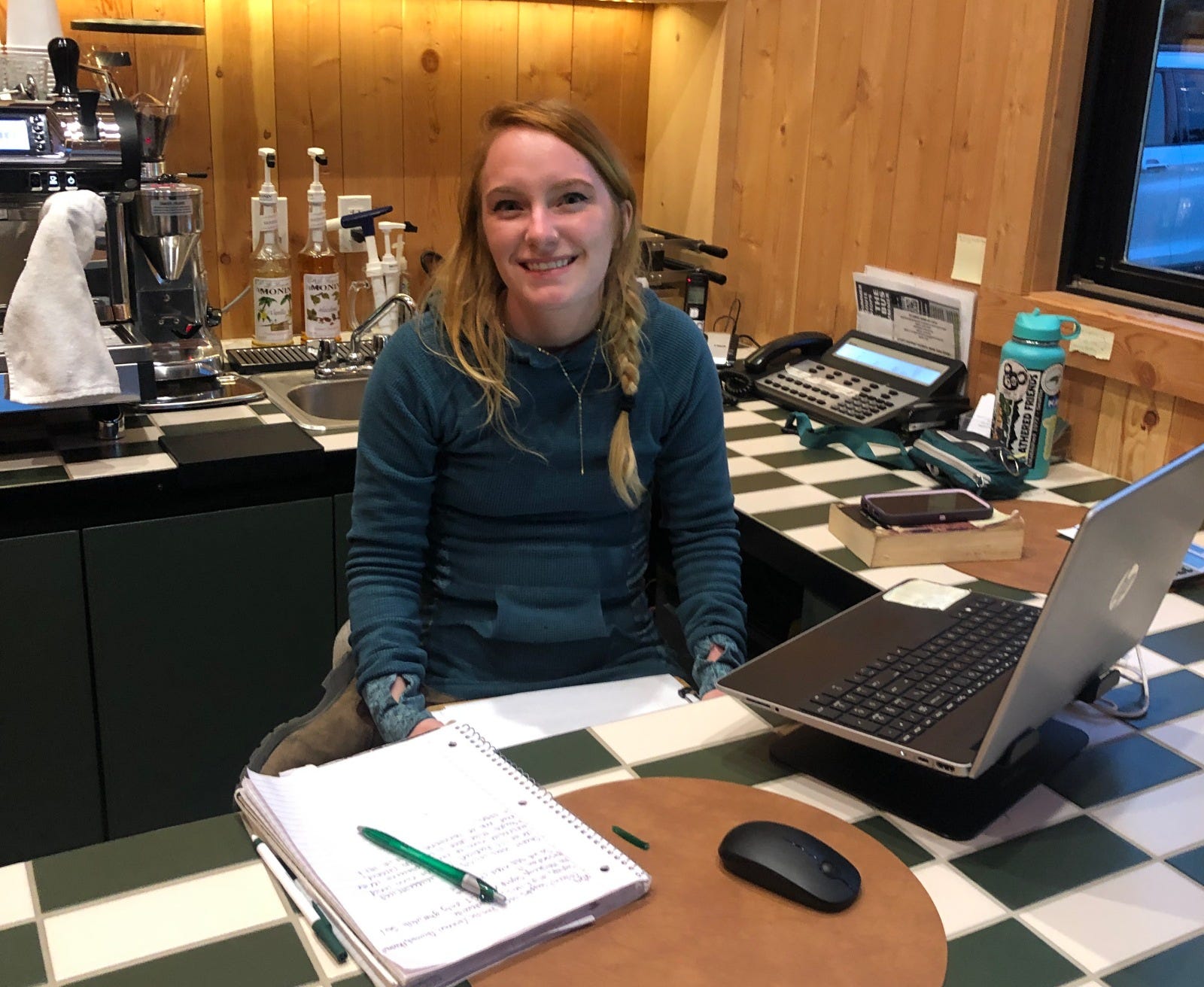
I chat with the hotel receptionist, Kayla. She’s lively and and had managed to stay calm when twenty-odd tired, bedraggled cyclists arrived to check in the previous day. I ask her where she comes from. She tells me she’s originally from Nashville but she and her husband decided that the settled life was not for them. They took to camping in wilderness areas where they could live a simpler life. Last year they did it for three months. They hope to do it longer this year. They get by financially on seasonal work.
The next night at a campsite by Swan Lake I meet Pam and Jim who manage the property. They’re from Seattle. They’re an older couple, mid to late 50s, each on their second marriage. They didn’t want the routine of home and neighbourhood. They outfitted a Winnebago. It didn’t take them long to land the job at Swan Lake. The Winnebago is their home. Their plan is to travel south as winter sets in.
Pam is gregarious and she’s the one on the computer registering us and giving us the info we need. Jim is pleasant but quieter. They walk around the property hand in hand; Jim has a pistol in a holster strapped around his waist.
Pam offers to take me and Cat to the local store, a couple of miles away to pick up some cold drinks and snacks. Outside the red clapper-board store a wooden-framed sign board spells out an inspirational message, “Nobody wins being afraid of losing.” Underneath it, another message: “Let’s go Brandon.” We ask Pam about it.
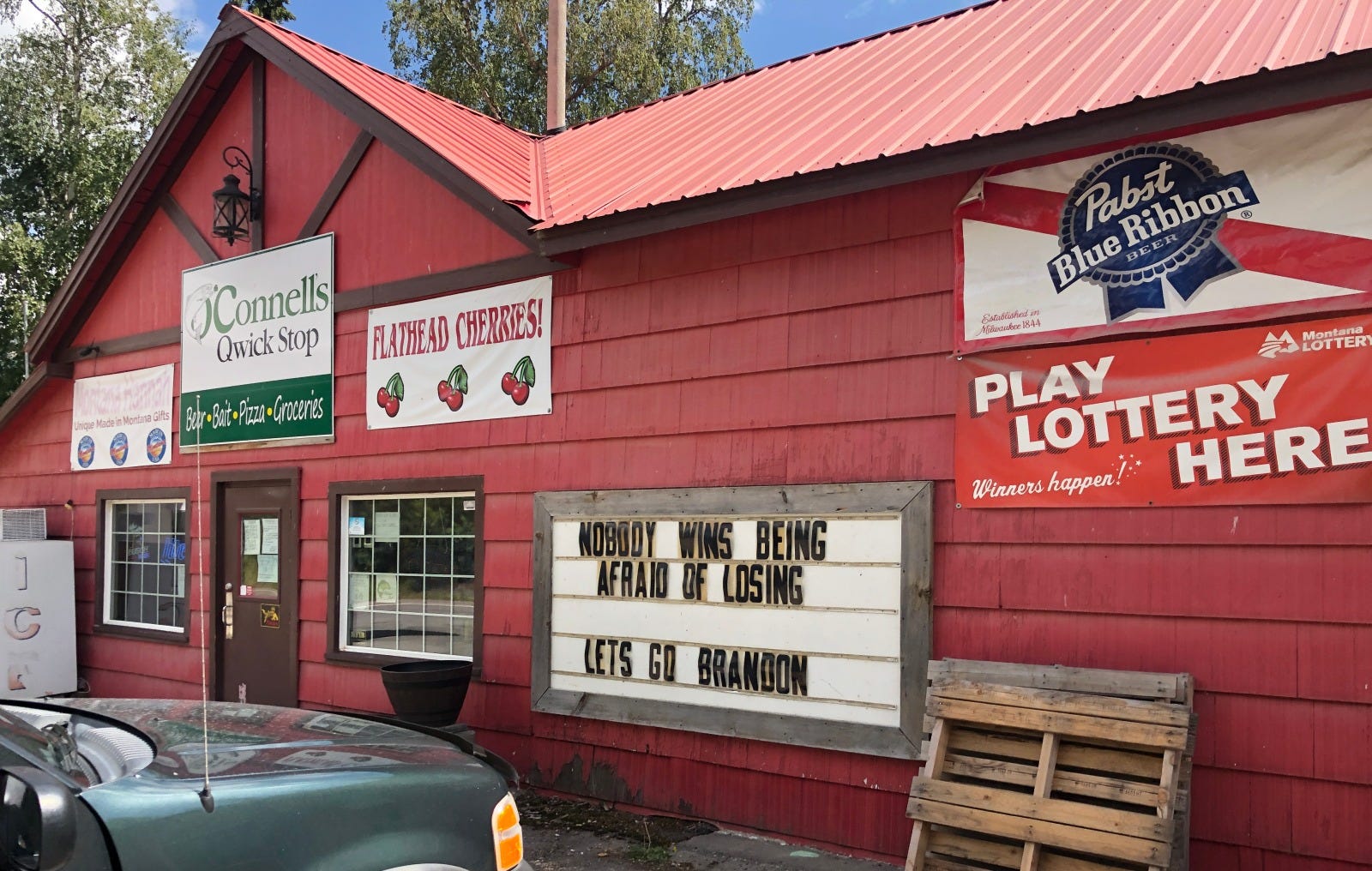
On the drive back she explains. “Brandon won a NASCAR race. A reporter was interviewing him. In the background the crowd was chanting, ‘Eff you, Biden.’ The reporter, obviously a Democrat, perked up and said, ’Oh, the crowd is cheering for you, Let’s go Brandon. Ever since then you’ll see ‘Let’s go, Brandon’ signs everywhere. And everyone knows what it means.”
Pam is a friendly, open-hearted person. But when she said the word “Democrat” it was not a description of a political affiliation. She almost recoiled as if she were calling up Satan. In Pam I saw viscerally that the divide between Red and Blue was not political. The division is quasi-religious; Democrat is a term of opprobrium reserved for heretics. I thought that the division resembled nothing so much as the profound abyss between Catholic and Protestant during the Reformation which ignited years of religious warfare.
There’s an ironic twist to the Pam story. That evening Natalie strolls into our camp. She asks if we’d be up to having an impromptu concert. She’s a singer/songwriter from Chicago where she’s part of an all-female acoustic David Bowie tribute band. About a month before she and her wife, Wendy, the drummer, decided to buy an refit a 1976 Airstream Odyssey, hit the road with their four pugs and see where life took them.
Within an hour they set up their equipment on a makeshift stage on the porch of the building containing the site’s washrooms. They play for well over an hour and would have gone on longer but we cyclists needed to get to sleep for our early morning start. They are really good and a welcome break from our normal evening routines.
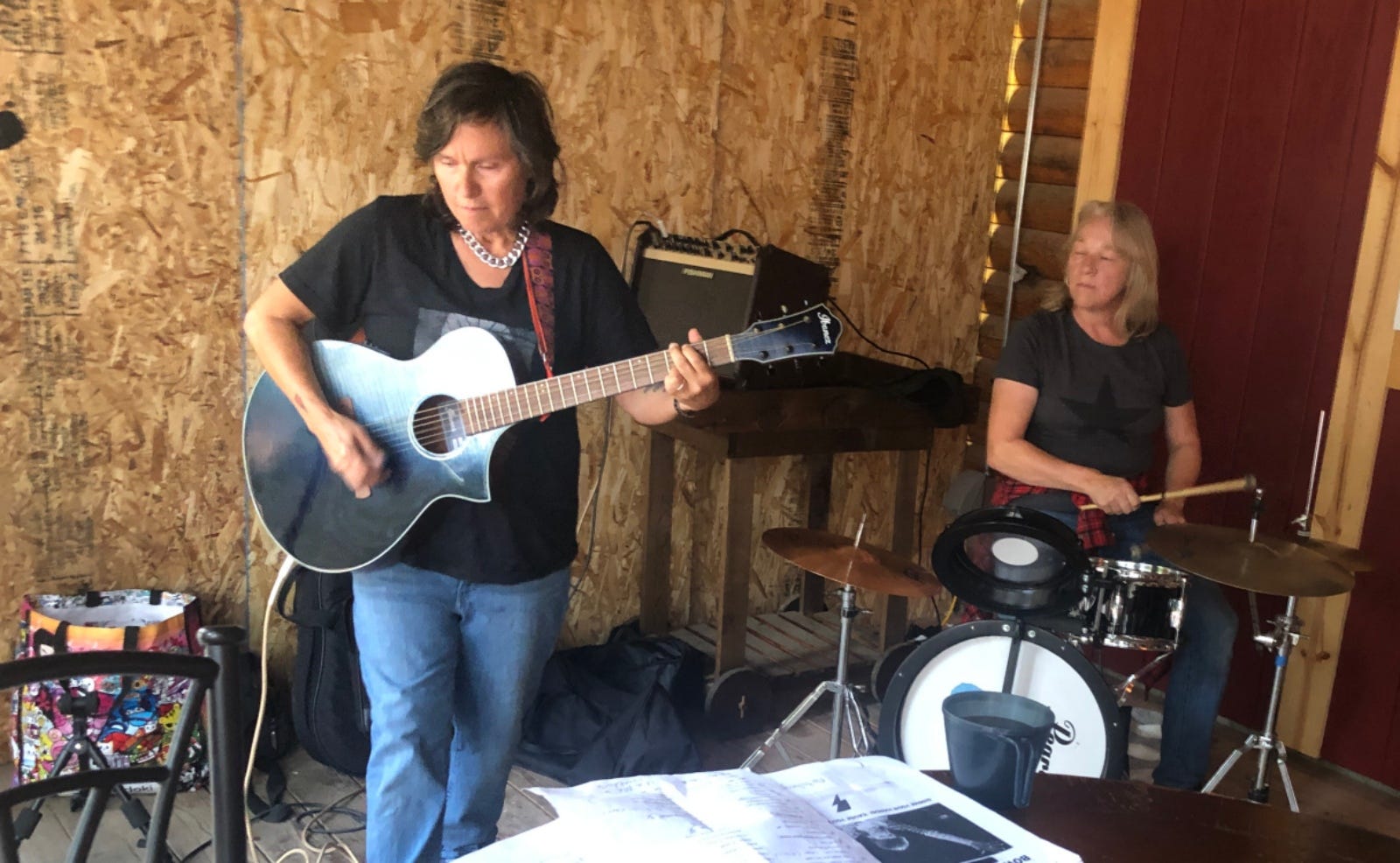
I pull Natalie aside after the concert. She vibrates with nervous energy talking a mile a minute. She was a special ed teacher. Ten years in Los Angeles; fifteen in Chicago. When her father was fifty-five he won the Illinois State Lottery. A month later he was dead. Natalie had just hit fifty-five; the same age her dad died. She had always played and sung. It was time to seize her dream. In Nashville she met a musician in a bar who told her, “What you want to do is perform, so play anywhere you can to anyone who’ll listen.” She took that advice to heart and her courage in her hands and went out into the world looking for audiences.
As for the Airstream: they wanted to break away from the constraints of the everyday and find the freedom that it seemed only the road could give them. Natalie is as far from Pam’s world as anyone could be. She theorizes that America is going through a psychotic episode. Yet the deeper commonality between Natalie and Pam lies in “the road” and what it means for them.
Leli is in the audience that evening. She’d come across Natalie before and was happy when chance afforded it to be a camp follower. She is a retired nurse, twenty years working at Cedar Sinai in Los Angeles. Covid was hard, very hard. In the end she decided she needed to get out, onto the road, into nature. She bought a camper and set out early that spring. She has no plans, no trajectory. It’s the forests that draw her and she’ll go where they call.
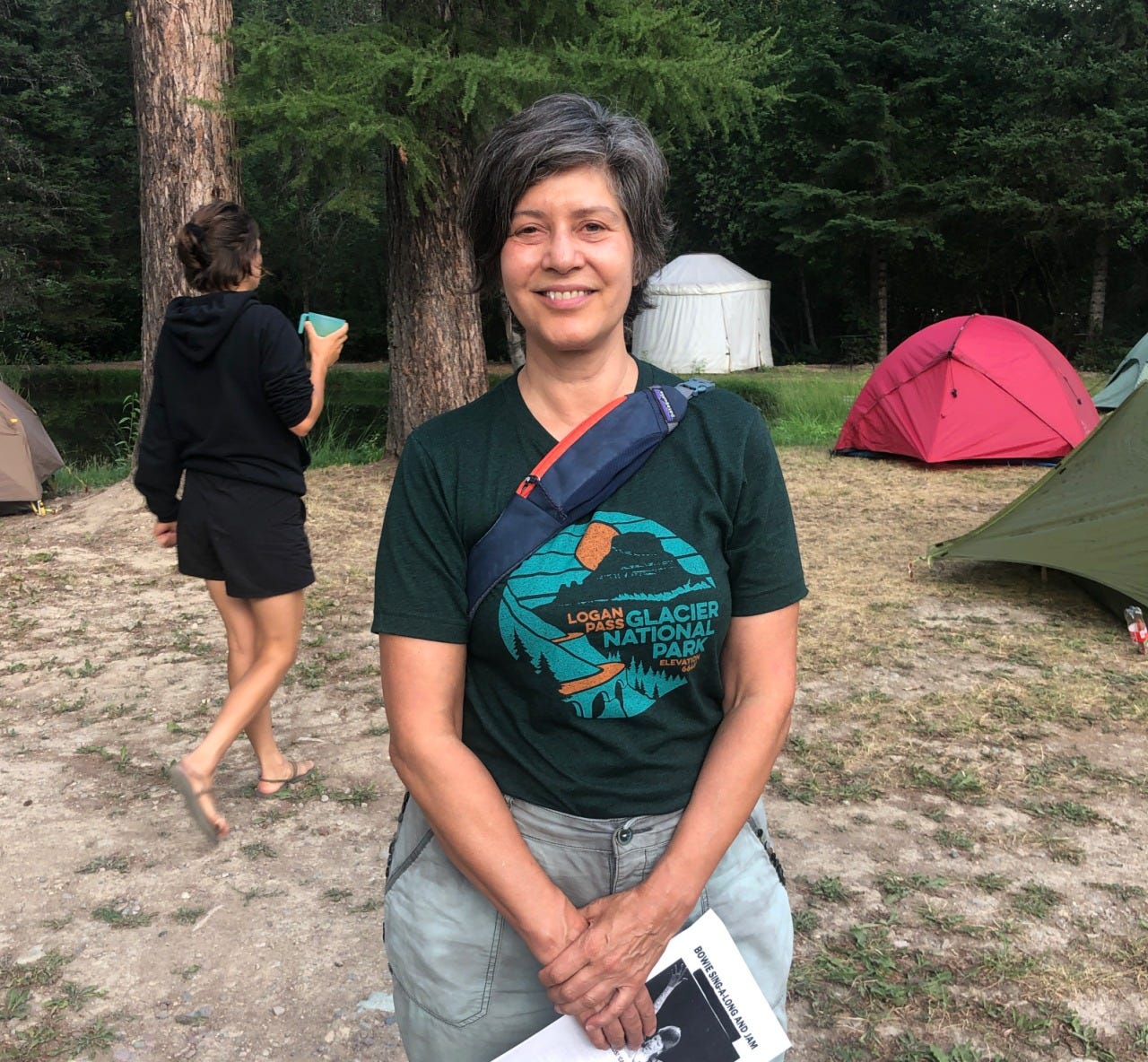
I ask her if she’s seen the Oscar-winning film Nomadland. Her response is unanticipated. She says it frightened her at first. She wondered if she was like the Frances McDormand character, fallen on hard times, living in a van while roaming the country for seasonal work. It took her a little while to calm down and understand that her voyaging was of a different order. Yet, as with Natalie and Kayla and even Pam and Raquel, Leli, in her way, embodies the particular restlessness of the American psyche..
The road and the wilderness—how deeply it calls the American soul. It is the myth of wildness, of freedom, of creativity, of rebirth. Sometimes it takes a darker turn.
A few days after leaving Swan Lake we camp in Lincoln, Montana. It was from the small post office here that the Unabomber, Ted Kaczynski, sent his mail bombs. He had moved to a remote cabin outside Lincoln to live a simple life. In his manifesto he railed against the erosion of individual freedom by modern technology driven by “leftists, feminists, and gay activists.” He argued that terrorism was the necessary means to combat the destructiveness of the industrial world. Hard not to see in Kaczynski a premonition of America’s torment to come.
Well said Laurent (and Tom, of course)
Dear (even if I only you from your words) Tom,
I thank you warmly for sharing your thoughts. Some have the ability to express things that, when you read them, feel like what you were thinking, but could not express yourself...
You are one of these specially gifted persons.
I wish you a good road and will follow you in thoughts.
Laurent